How we turned a fintech ecosystem owner into the name people come to — a brand world worth an extra $16–20 million a year.
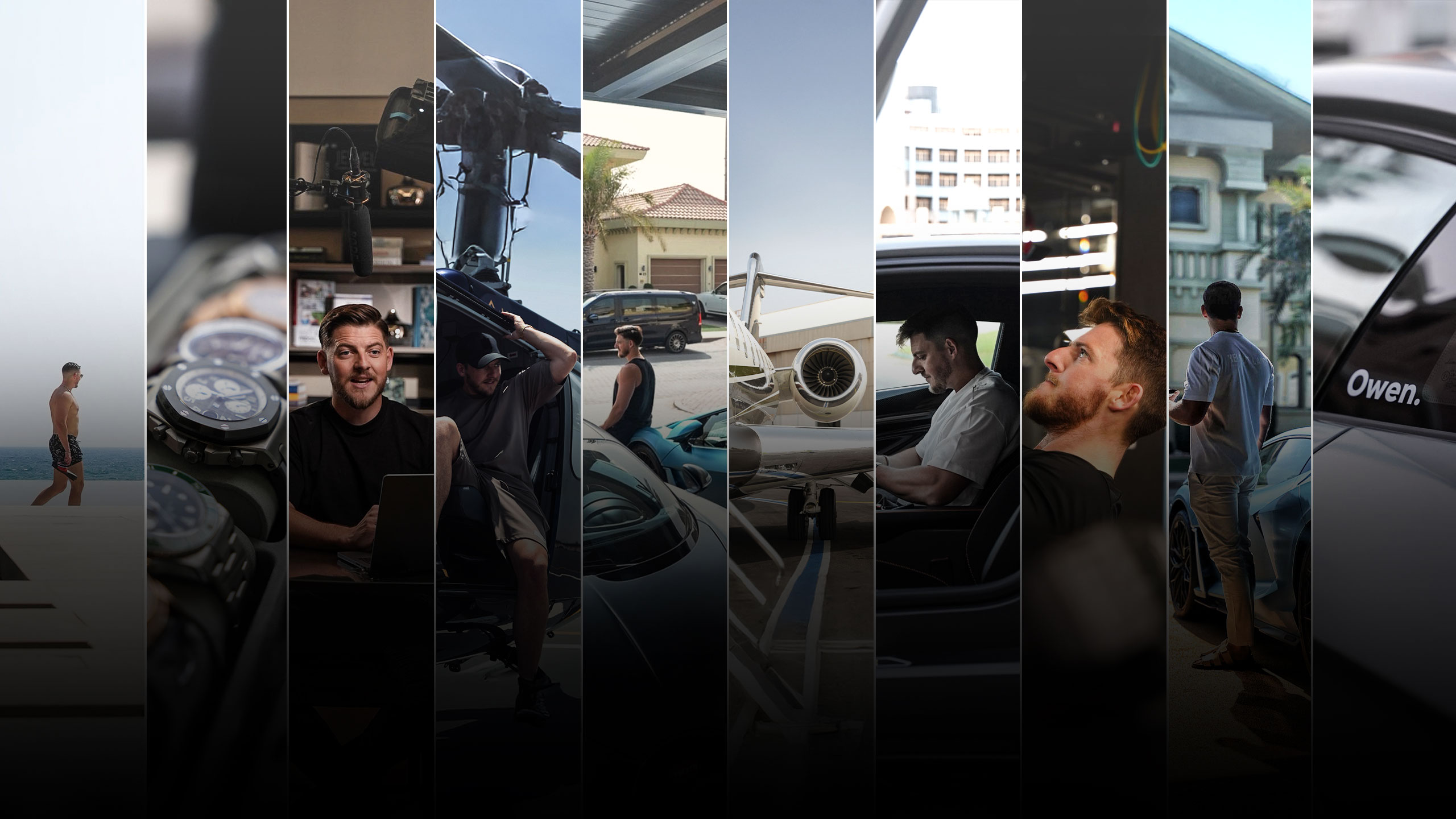
Owen owns a fintech ecosystem — trading platforms, education, tools and live trading, tied together by an affiliate model. The products were strong. The revenue was real. What was missing was pull: he read like an operator running a business, not a name people were drawn to.
Everything he published was a piece — a post here, an update there — and none of the pieces connected. The ecosystem had a login page, not a world. He didn't have a visibility problem. He had a gravity problem.
It needed a front door. And the strongest front door a founder-led business has is the founder.
Owen wasn't a brand yet — he was a business with his name attached. The move wasn't more ads or more launches. It was to build a brand world around him, so that meeting Owen meant stepping into the whole ecosystem, everywhere, all pointing the same way.
Make the founder the front door, and every product line inherits the traffic.
We built Owen's brand world on social — a clear identity, a real point of view, and a story told in public, consistently, everywhere at once. Three things carried it:
Who Owen is and what he stands for — a fixed centre that made every post, every product and every price read as one coherent voice.
The wins, the lessons, the journey — documented, not announced. Proof of concept on repeat, until the audience came to him.
Every piece of content pointed back to the ecosystem, so attention on Owen became attention on the products — compounding, not leaking.
Not from new products. Not from more ad spend. From the same business, finally wearing its own gravity — the personal brand became the front door to the entire ecosystem, and the numbers followed.
"Same person. Same products. Different world."
If your products are strong but the brand around them is invisible, that's a world problem — and it's exactly what the Sprint is built to fix.
Book a discovery call